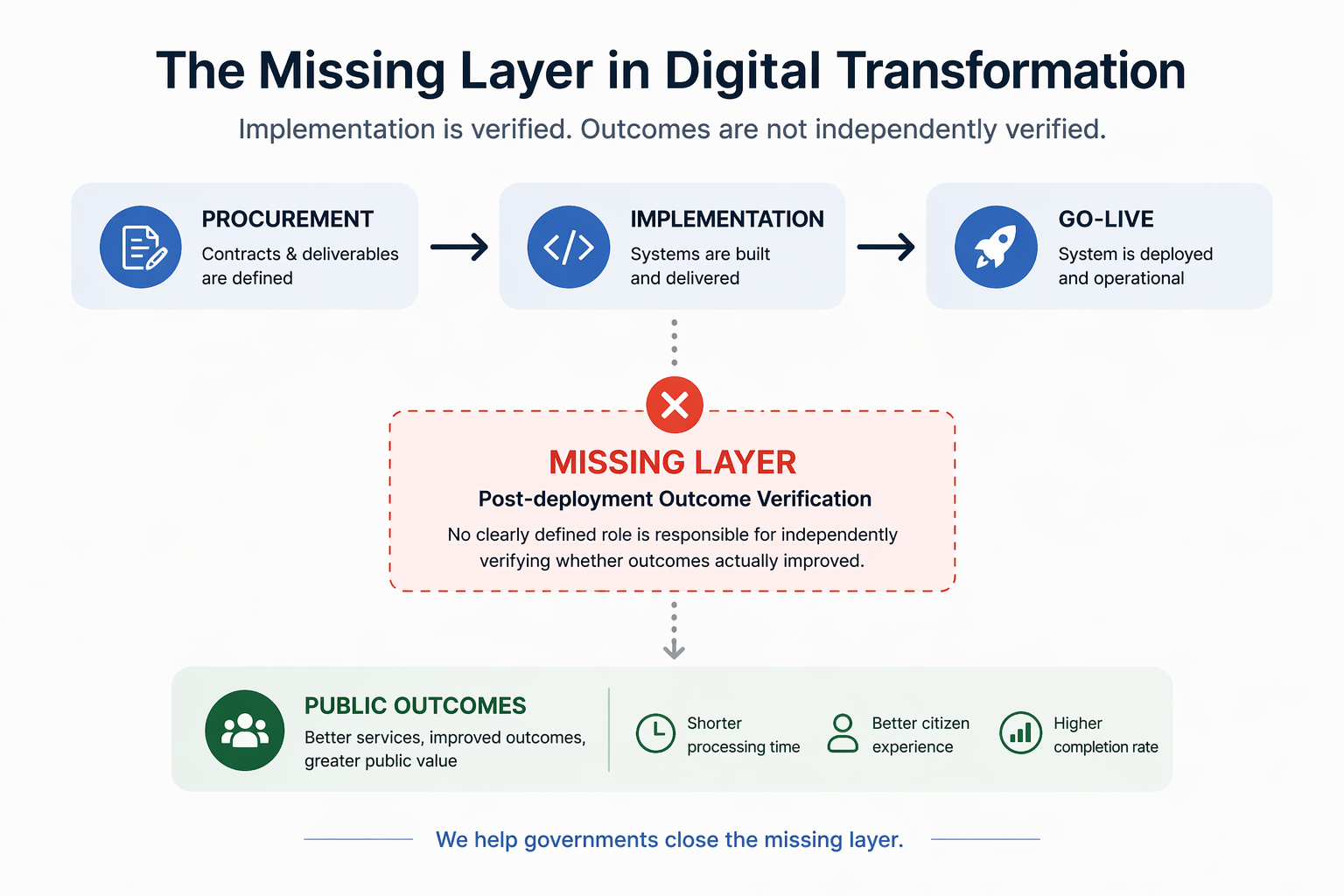
OECD identified a structural gap. Legal independence independence in practice. Existing tools cannot measure what actually happens in governance systems.
— OECD/IDI Report, May 27, 2026
EO 14402 made independent outcome verification a regulatory necessity. Fixed-price contracts as default require someone to verify whether public investment actually improved citizens' ability to access services.
— EO 14402, April 30, 2026
GL Framework closes this gap. It translates governance performance into measurable, comparable, verifiable parameters — and reveals who actually bears the cost.
The Missing Layer
No party. No ideology. Just math.
What Cannot Be Measured Cannot Be Repaired Governance Gap → Hidden Loss → Measurement → Accountability OECD Gap Legal ≠ Practice No measurement tool Ghost GDP Hidden economic loss Shifted onto citizens GL Framework Measures friction Quantifiable parameters GL Verifier Independent check Turns measurement into accountability Capital cannot optimize what it cannot measure.
"GDP measures recorded transactions.
It does not ask: who bears the cost?"
GL Framework asks that question. And measures the answer.
🏭
The structural gap
Systems often transfer costs outward as an unmeasured consequence of process design. This can appear in environmental impact, labor classification, or administrative friction left with citizens.
📊
Why GDP never sees it
GDP records the final transaction. It does not track what happened before — who waited, who re-filed, who gave up. Those costs are real, but they remain invisible in national accounts.
🕳️
A gap across disciplines
Economics does not measure who bears the cost. Procurement rarely tracks post-signature outcomes. Auditors focus on compliance, not friction. Most existing tools focus on business compliance, not citizen burden. The missing piece is transferred cost.
📉 What GL Measures: Three Layers of Waste
⏱️
Visible waste
Redundant steps, waiting, rework — directly measurable in staff hours and budget.
👻
Hidden waste
Abandoned applications, lost bids — foregone value never tracked.
🏛️
Structural waste
Information asymmetry, psychological friction, opportunity cost — erosion of trust and long-term efficiency.
GL does not accuse. It adds a layer of visibility that standard accounting was never designed to provide.
🔗 GL Framework closes this gap — across all of them.
Its denominator — Pd × Cf (Pain Duration × Cognitive Friction) — measures how much cost the system has shifted onto the user. A low GL indicates that friction is being transferred outward rather than resolved.
GL = (Fs × Vn) / (Pd × Cf)
↓ Low GL = the system is shifting cost onto you ↓
Ghost GDP is that shifted cost — never recorded in any national ledger. Not an accounting error. A blind spot in how GDP accounts for economic activity.
GL Verifier turns independent verification from a checkbox into a single question:
Is the system delivering value to the public — or simply shifting friction outward instead of solving it?
Ping Xu · Founder, GFI Flow Intelligence · Inventor, GL Framework
For government and media inquiries: ping@gfiintel.com
For Procurement Officers & Vendors
Add a 90-Day Outcome Verification Requirement to Your RFP
Get Procurement Insert →
GFI Check · Free Assessment Tool
Measure Your System's Generalization Efficiency
IMCR + GL Level · Based on GEF (SSRN peer-reviewed)
Launch GFI Check →
OECD 指出了結構性缺口。 法律上的獨立 實踐中的獨立。現有工具無法測量治理體系中實際發生的情況。
— OECD/IDI 報告,2026年5月27日
EO 14402 讓獨立成果驗證成為法規上的必須。 固定價格合約為預設,需要有人驗證公共投資是否真的改善了民眾獲得服務的能力。
— EO 14402,2026年4月30日
GL Framework 填補這個缺口。 它將治理績效轉化為可測量、可比較、可驗證的參數——並揭露誰在真正承受成本。
數位轉型中的缺失層
無黨無派。只有數學。
無法測量,就無法修復 治理缺口 → 隱形損失 → 測量工具 → 獨立驗證 OECD 缺口 法律獨立 ≠ 實踐獨立 沒有測量工具 幽靈 GDP 隱藏的經濟損失 被轉嫁給公民 GL Framework 測量行政摩擦 轉為可量化參數 GL Verifier 獨立第三方驗證 將測量轉為問責 資本無法優化它無法測量的東西
「GDP 只記錄交易。
它從不問:誰在承受成本?
GL Framework 問這個問題。並且測量答案。
🏭
結構性缺口
系統在設計時,經常將成本向外轉移,形成未被測量的後果。這可能出現在環境影響、勞動分類,或是留給公民的行政摩擦上。
📊
為什麼 GDP 看不見
GDP 只記錄最終交易。它不追蹤交易之前發生的事——誰在等?誰重複申報?誰放棄了?那些成本是真實的,但在國家帳本中始終是隱形的。
🕳️
跨領域的共同缺口
經濟學不測量誰承受成本。採購很少追蹤簽約後的結果。審計聚焦合規,而非摩擦。多數現有工具只看企業合規,不看公民負擔。缺的那一塊都是被轉嫁的成本
📉 GL 測量什麼:三層浪費
⏱️
看得見的浪費
重複步驟、等待、重工——可直接換算為人力與預算成本。
👻
看不見的浪費
放棄的申請、流失的標案——從未被追蹤的隱性損失。
🏛️
結構性浪費
資訊不對稱、心理摩擦、機會成本——長期侵蝕信任與效能。
GL 不指責。它增加一層標準會計從未設計要提供的可視性。
🔗 GL Framework 補上這個缺口——跨所有領域。
它的分母——Pd × Cf(痛苦持續時間 × 認知摩擦)——測量的是系統轉嫁給使用者的成本有多少。GL 越低,代表摩擦被往外轉嫁而非被解決。
GL = (Fs × Vn) / (Pd × Cf)
↓ GL 越低 = 系統正在把成本轉嫁給你 ↓
幽靈GDP 就是那個被轉嫁的成本——從未出現在任何國家的帳本上。不是計算錯誤。是 GDP 統計經濟活動時的一個盲點。
GL Verifier 把獨立驗證從「打勾」變成一個問題:
系統是在為公眾創造價值——還是只是把摩擦往外推,而不是解決它?
Ping Xu · GFI Flow Intelligence 創辦人 · GL Framework 發明者
政府與媒體查詢:ping@gfiintel.com
給採購官員與 Vendor
在你的 RFP 中加入90天成果驗證要求
取得採購條款 →
GFI Check · 免費評估工具
衡量你的系統普遍化效率
IMCR + GL Level · 基於 GEF (SSRN 同儕審查)
開啟 GFI Check →
OECD 指出了结构性缺口。 法律上的独立 实践中的独立。现有工具无法衡量治理体系中实际发生的情况。
— OECD/IDI 报告,2026年5月27日
EO 14402 让独立成果验证成为法规上的必须。 固定价格合约为预设,需要有人验证公共投资是否真的改善了民众获得服务的能力。
— EO 14402,2026年4月30日
GL Framework 填补这个缺口。 它将治理绩效转化为可测量、可比较、可验证的参数——并揭露谁在真正承受成本。
数字化转型中的缺失层
无党无派。只有数学。
无法测量,就无法修复 治理缺口 → 隐形损失 → 测量工具 → 独立验证 OECD 缺口 法律独立 ≠ 实践独立 没有测量工具 幽灵 GDP 隐藏的经济损失 被转嫁给公民 GL Framework 测量行政摩擦 转为可量化参数 GL Verifier 独立第三方验证 将测量转为问责 资本无法优化它无法测量的东西
「GDP 只记录交易。
它从不问:谁在承受成本?
GL Framework 问这个问题。并且测量答案。
🏭
结构性缺口
系统在设计时,经常将成本向外转移,形成未被测量的后果。这可能出现在环境影响、劳动分类,或是留给公民的行政摩擦上。
📊
为什么 GDP 看不见
GDP 只记录最终交易。它不追踪交易之前发生的事——谁在等?谁重复申报?谁放弃了?那些成本是真实的,但在国家账本中始终是隐形的。
🕳️
跨领域的共同缺口
经济学不测量谁承受成本。采购很少追踪签约后的结果。审计聚焦合规,而非摩擦。多数现有工具只看企业合规,不看公民负担。缺的那一块都是被转嫁的成本
📉 GL 测量什么:三层浪费
⏱️
看得见的浪费
重复步骤、等待、返工——可直接换算为人力与预算成本。
👻
看不见的浪费
放弃的申请、流失的标案——从未被追踪的隐性损失。
🏛️
结构性浪费
信息不对称、心理摩擦、机会成本——长期侵蚀信任与效能。
GL 不指责。它增加一层标准会计从未设计要提供的可视性。
🔗 GL Framework 补上这个缺口——跨所有领域。
它的分母——Pd × Cf(痛苦持续时间 × 认知摩擦)——测量的是系统转嫁给使用者的成本有多少。GL 越低,代表摩擦被往外转嫁而非被解决。
GL = (Fs × Vn) / (Pd × Cf)
↓ GL 越低 = 系统正在把成本转嫁给你 ↓
幽灵GDP 就是那个被转嫁的成本——从未出现在任何国家的账本上。不是计算错误。是 GDP 统计经济活动时的一个盲点。
GL Verifier 把独立验证从「打勾」变成一个问題:
系统是在为公众创造价值——还是只是把摩擦往外推,而不是解决它?
Ping Xu · GFI Flow Intelligence 创办人 · GL Framework 发明者
政府与媒体查询:ping@gfiintel.com
给采购官员与 Vendor
在你的 RFP 中加入90天成果验证要求
获取采购条款 →
GFI Check · 免费评估工具
衡量你的系统普遍化效率
IMCR + GL Level · 基于 GEF (SSRN 同行评审)
开启 GFI Check →
La OCDE identificó una brecha estructural. La independencia legal la independencia en la práctica. Las herramientas existentes no pueden medir lo que realmente sucede en los sistemas de gobernanza.
— Informe OCDE/IDI, 27 de mayo de 2026
EO 14402 hizo de la verificación independiente de resultados una necesidad regulatoria. Los contratos de precio fijo requieren que alguien verifique si la inversión pública realmente mejoró la capacidad de los ciudadanos para acceder a los servicios.
— EO 14402, 30 de abril de 2026
GL Framework cierra esta brecha. Traduce el rendimiento de la gobernanza en parámetros medibles, comparables y verificables — y revela quién soporta realmente el costo.
La capa faltante
Sin partidos. Sin ideologías. Solo matemáticas.
Lo que no se mide, no se puede reparar Brecha de gobernanza → Pérdida oculta → Medición → Verificación Brecha OCDE Independencia legal ≠ práctica Sin herramienta de medición PIB Fantasma Pérdida económica oculta Transferida a los ciudadanos GL Framework Mide la fricción Parámetros cuantificables GL Verifier Verificación independiente Convierte medición en rendición de cuentas El capital no puede optimizar lo que no puede medir.
"El PIB mide transacciones registradas.
No pregunta: ¿quién soporta el costo?"
GL Framework hace esa pregunta. Y mide la respuesta.
🏭
La brecha estructural
Los sistemas a menudo transfieren costos hacia afuera como una consecuencia no medida del diseño de procesos. Esto puede aparecer en el impacto ambiental, la clasificación laboral o la fricción administrativa dejada en los ciudadanos.
📊
Por qué el PIB nunca lo ve
El PIB registra la transacción final. No rastrea lo que sucedió antes — quién esperó, quién volvió a presentar, quién se rindió. Esos costos son reales, pero permanecen invisibles en las cuentas nacionales.
🕳️
Una brecha entre disciplinas
La economía no mide quién soporta el costo. Las compras rara vez rastrean los resultados posteriores a la firma. Los auditores se centran en el cumplimiento, no en la fricción. La mayoría de las herramientas existentes se centran en el cumplimiento empresarial, no en la carga ciudadana. La pieza faltante es el costo transferido.
📉 Qué mide GL: Tres capas de desperdicio
⏱️
Desperdicio visible
Pasos redundantes, esperas, retrabajo — medibles directamente en horas de personal y presupuesto.
👻
Desperdicio oculto
Solicitudes abandonadas, ofertas perdidas — valor perdido nunca rastreado.
🏛️
Desperdicio estructural
Asimetría de información, fricción psicológica, costo de oportunidad — erosión de la confianza y la eficiencia a largo plazo.
GL no acusa. Añade una capa de visibilidad que la contabilidad estándar nunca fue diseñada para proporcionar.
🔗 GL Framework cierra la brecha — en todas ellas.
Su denominador — Pd × Cf (Duración del Dolor × Fricción Cognitiva) — mide cuánto costo ha transferido el sistema al usuario. Un GL bajo indica que la fricción se está transfiriendo hacia afuera en lugar de resolverse.
GL = (Fs × Vn) / (Pd × Cf)
↓ GL bajo = el sistema te está transfiriendo el costo ↓
PIB Fantasma es ese costo transferido — nunca registrado en ningún libro mayor nacional. No es un error contable. Un punto ciego en la forma en que el PIB contabiliza la actividad económica.
GL Verifier convierte la verificación independiente de una casilla de verificación en una sola pregunta:
¿El sistema está entregando valor al público — o simplemente transfiriendo la fricción hacia afuera en lugar de resolverla?
Ping Xu · Fundadora, GFI Flow Intelligence · Inventora, GL Framework
Consultas de gobiernos y medios: ping@gfiintel.com
Para Oficiales de Contratación y Vendors
Añade un Requisito de Verificación de 90 Días a tu RFP
Obtener Inserto de Contratación →
GFI Check · Herramienta Gratuita
Mide la Eficiencia de Generalización de tu Sistema
IMCR + GL Level · Basado en GEF (revisado por SSRN)
Abrir GFI Check →